
A thoughtful apartment renovation isn't just about updating the interiors. It's about creating a home that supports the way you want to live, both now and into the future.
For many homeowners, retirement brings an opportunity to rethink what they want from their home.
Perhaps the family house has become too large to maintain, the garden requires more attention than you'd like, or you're looking forward to a lifestyle that allows more time for travel, family and the things you enjoy.
Moving into an apartment can offer a wonderful change of pace. But finding an apartment in the right location doesn't necessarily mean the interior will suit your lifestyle.
Older kitchens, impractical storage, dated bathrooms and awkward layouts can make an otherwise lovely apartment feel less comfortable than it should.
A considered renovation provides an opportunity to create a home that feels personal, functions beautifully and is designed with the future in mind.
1. Start With How You Want to Live
Before choosing cabinetry colours or bathroom tiles, it's worth considering how your daily routine might change in retirement.
You may be entertaining more often, enjoying slower mornings, spending more time at home or travelling for extended periods.
Think about how you want to use each space.
Do you need a dedicated study, or would a flexible guest bedroom work better? Would you prefer a larger dining area for family gatherings or a comfortable living space where you can relax and enjoy the view?
If you're moving from a larger home, it's also important to consider which furniture and belongings you genuinely want to bring with you.
Apartment living often requires a different approach to space planning, and trying to accommodate everything from your previous home can leave rooms feeling overcrowded.
The goal isn't to recreate your old home on a smaller scale. It's to design a home around the lifestyle you're moving towards.
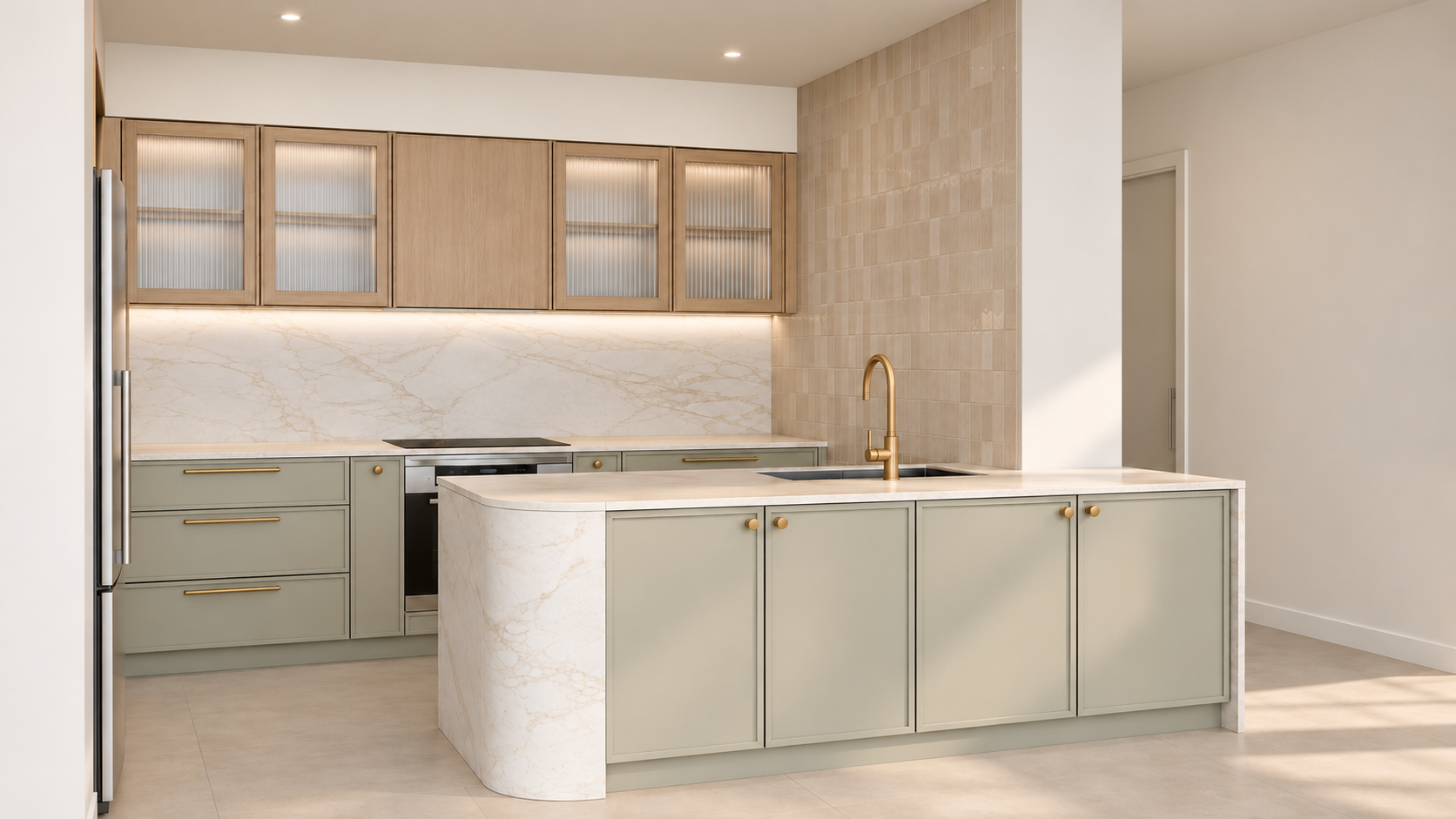
3d render image of new kitchen design.
2. Consider Accessibility Before You Need It
One of the most valuable things you can do when renovating for retirement is to consider how your home might need to function in the years ahead.
This doesn't mean your apartment needs to look clinical or be fitted with features you don't currently require.
It's about making practical decisions now that could prevent costly changes later.
In the bathroom, this might include a walk-in shower with minimal or no step, slip-resistant flooring, easy-to-operate tapware and sufficient space to move comfortably.
Where appropriate, walls can also be reinforced during renovations to allow grab rails to be installed in the future without extensive additional work.
In the kitchen, consider drawers instead of deep cupboards, accessible storage and appliances positioned at comfortable heights.
Lighting is another important consideration. Good task lighting in the kitchen, bathroom and laundry can make everyday activities easier, while thoughtful night-time lighting can improve visibility.
These details can be incorporated into a contemporary interior without compromising its appearance.
Where accessibility is a priority, your designer should also work with appropriately qualified professionals to ensure the proposed layout and details meet your specific needs.
3. Make Every Square Metre Work Harder
When renovating an apartment, good space planning is particularly important.
Unlike a freestanding home, apartments often have fixed structural walls, plumbing locations and limited opportunities to expand.
This means the success of a renovation frequently comes down to making better use of the space you already have.
A kitchen may benefit from a revised cabinetry layout rather than being completely relocated.
A poorly functioning laundry might be redesigned with more practical storage, a generous benchtop and concealed appliances.
In the living area, custom joinery can provide a combination of storage, display space and entertainment cabinetry without requiring several separate furniture pieces.
Consider furniture proportions carefully, too. Oversized pieces can make circulation difficult, while furniture that's too small may leave a room feeling disconnected.
A detailed furniture plan helps establish what will comfortably fit before purchases are made.
In apartment design, thoughtful planning often makes a greater difference than adding more.
4. Invest in a Kitchen That Makes Everyday Life Easier
The kitchen is one of the most worthwhile areas to reconsider during a retirement apartment renovation.
Even if you enjoy cooking, your needs may be different from those of a busy family household.
You might prefer generous preparation space, easily accessible cookware, an appliance cupboard that keeps the benchtops clear or a smaller but better-organised pantry.
Deep drawers can be easier to access than low cupboards, particularly for pots, pans and heavier items.
It's also worth considering the placement of frequently used appliances and whether there is enough clear benchtop space beside the oven, refrigerator and sink.
Rather than focusing entirely on appearance, consider how each design decision will make the kitchen more comfortable and practical to use every day.
The best kitchen is one that looks beautiful but also feels intuitive to work in.
5. Create a Bathroom That Balances Comfort, Safety and Style
Bathrooms deserve particular attention when renovating an apartment for retirement.
Older apartments often have small shower enclosures, raised shower bases, limited storage and insufficient lighting.
A renovation is an opportunity to address these issues while creating a bathroom that feels contemporary and comfortable.
Consider a generously sized shower, easy-to-clean surfaces, practical vanity storage and lighting around the mirror.
Wall-hung vanities can make a bathroom feel more spacious, although the final design should also consider accessibility and how the storage will be used.
If you're planning to remain in the apartment for many years, it's worth discussing future mobility requirements during the design stage.
A well-considered bathroom should feel like a beautiful residential space, with practical details incorporated discreetly into the design.
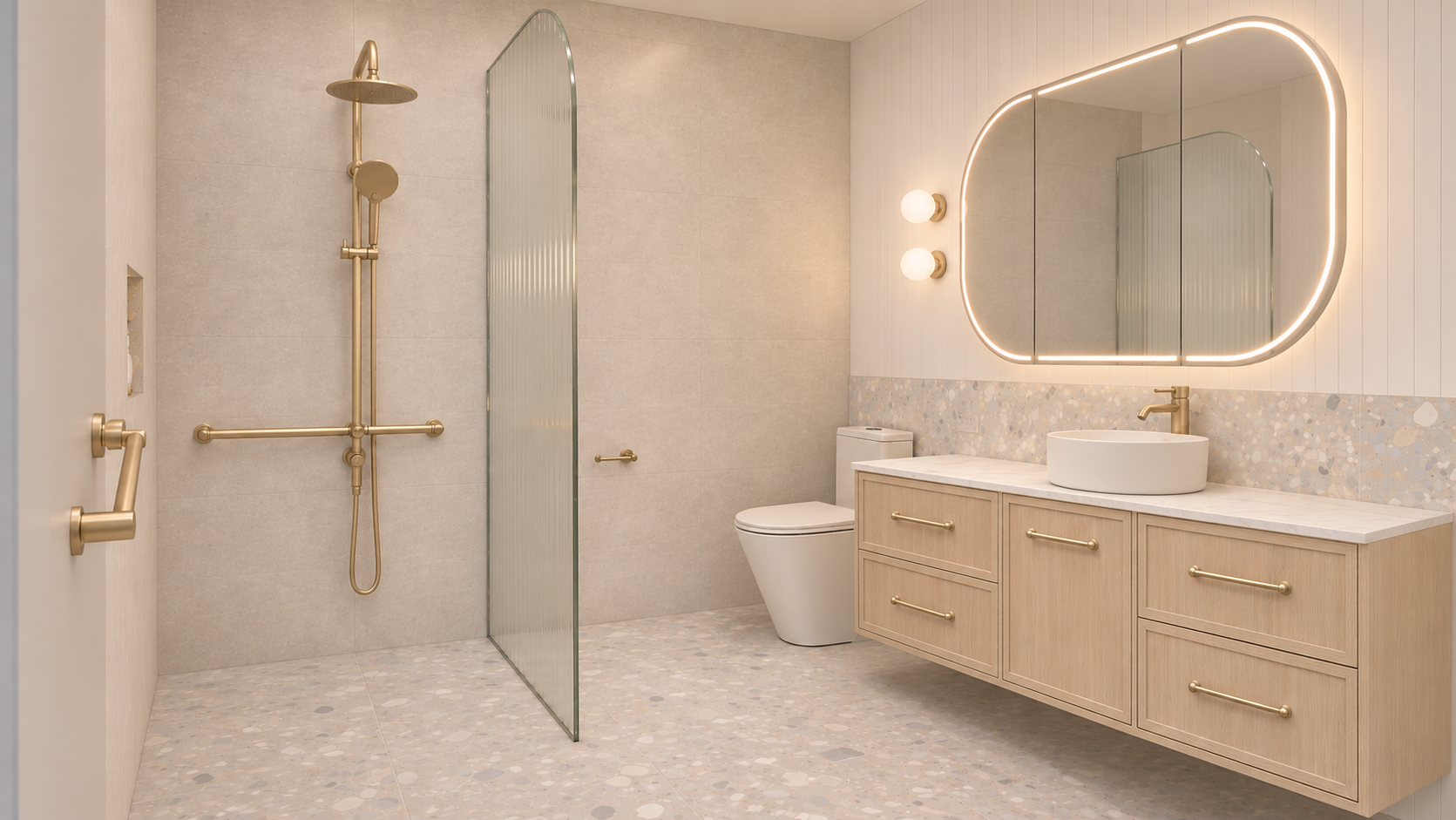
3d rendered image of new bathroom design.
6. Choose Materials for Longevity, Not Just Appearance
When planning a renovation intended to last well into retirement, it's tempting to focus entirely on creating a timeless look.
But longevity is about more than choosing neutral colours.
Materials also need to be appropriate for everyday use, easy to maintain and suited to the apartment's environment.
For example, flooring should be considered for durability, slip resistance, comfort underfoot and acoustic performance.
Cabinetry finishes should be practical to clean, while benchtop materials need to suit the way you use your kitchen.
If your apartment is near the coast, exposure to salt air and humidity may also influence the selection of certain fittings, fixtures and materials.
A restrained, cohesive palette can provide a foundation that won't feel dated quickly, while colour, artwork, texture and furnishings allow the interior to reflect your personality.
Timeless design doesn't have to mean a home without character.
The aim is to choose finishes you will continue to enjoy, rather than following trends that may feel tired in a few years.
7. Don't Overlook Storage
Downsizing doesn't necessarily mean you have fewer things to store.
You may still have seasonal decorations, luggage, hobby equipment, family keepsakes, paperwork and items you don't use every day.
Without a considered storage plan, these belongings can quickly take over cupboards, spare bedrooms and living areas.
During the renovation, look for opportunities to integrate storage into the design.
Full-height cabinetry, well-planned wardrobes, concealed laundry storage and multifunctional joinery can all help make an apartment feel organised without adding visual clutter.
It's also important to think about accessibility.
Frequently used items should be easy to reach, while heavier belongings are best stored where they can be accessed without excessive bending or lifting.
Good storage isn't simply about fitting more into the apartment. It's about making everyday life easier.
8. Understand the Limitations of Apartment Renovations
Renovating an apartment can be quite different from renovating a freestanding house.
Before committing to major changes, it's important to understand what can realistically be achieved.
Body corporate requirements, structural walls, waterproofing, plumbing locations, acoustic regulations and access for trades can all influence the renovation.
In Queensland, some apartment works may require body corporate approval, and building approvals or other permissions may also apply depending on the scope.
Moving a kitchen or bathroom, for example, may not be straightforward if drainage and services cannot be relocated easily.
Replacing flooring may also involve acoustic requirements to minimise noise transfer between apartments.
Engaging a designer early in the process can help identify these constraints and develop a practical design direction before significant time and money are invested.
Detailed plans, elevations and material schedules can also give builders and trades clearer information when preparing quotations.
While documentation cannot eliminate every unexpected cost, it can reduce ambiguity and make it easier to compare quotations on a consistent basis.
9. Design for the Life You Want, Not Just the Years Ahead
While future practicality is important, it shouldn't become the only consideration.
Retirement is also an opportunity to create a home that feels distinctly yours.
Perhaps you've always wanted a beautiful kitchen, a comfortable reading corner, a guest bedroom that feels like a boutique hotel or a living space designed around a treasured view.
These personal details matter just as much as practical storage and accessible layouts.
Your home should reflect your interests, your experiences and the way you enjoy spending your time.
A successful retirement apartment renovation finds the balance between comfort, functionality, longevity and personality.
It's not about preparing for every possible future scenario.
It's about making thoughtful decisions that allow you to enjoy your home now, while giving it the flexibility to adapt as your needs change.
Planning an Apartment Renovation?
If you're downsizing into an apartment or renovating your existing home for retirement, having a clear design plan from the beginning can make the process far more manageable.
At Manea Interior Design & Styling, I work with homeowners across Brisbane, Redcliffe, the Sunshine Coast and Gold Coast to develop considered interiors that balance practical requirements with a cohesive, personal design direction.
From space planning and kitchen and bathroom concepts through to material selections, joinery design, documentation and furnishing, the aim is to create a home that feels comfortable, functional and right for the years ahead.
Planning your next chapter? Get in touch to arrange an initial consultation and discuss your apartment renovation.